
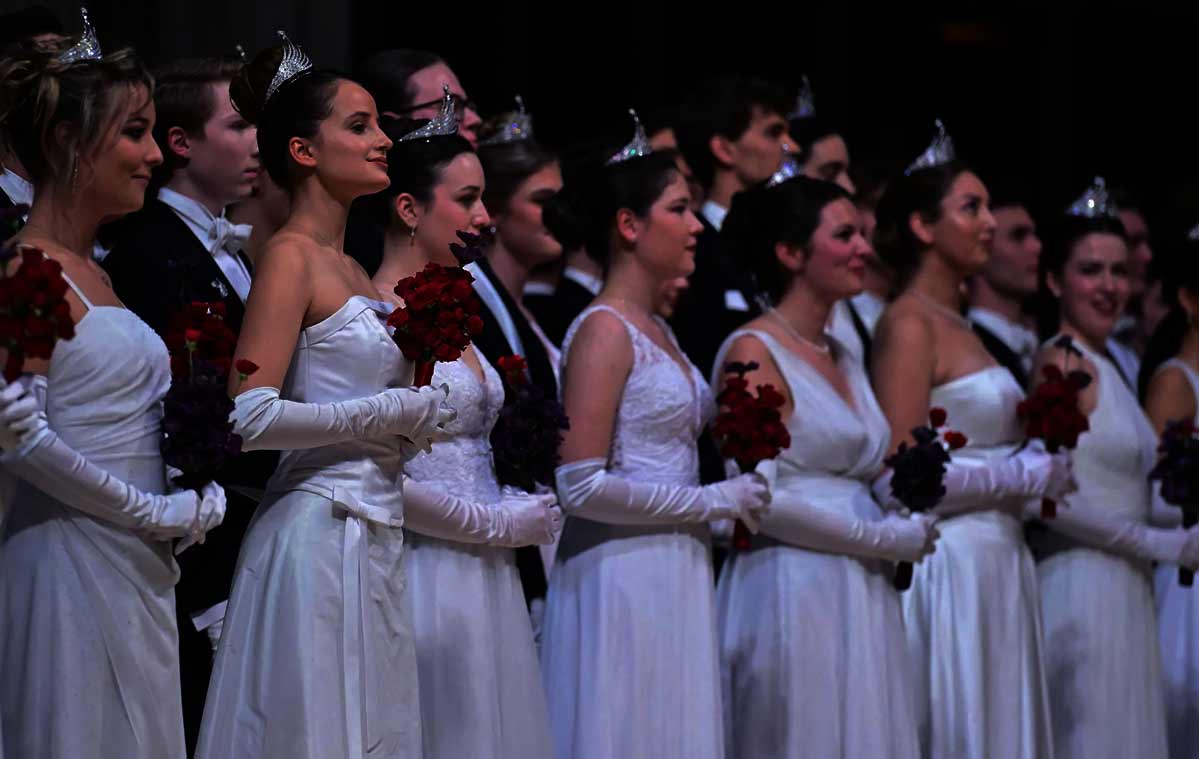
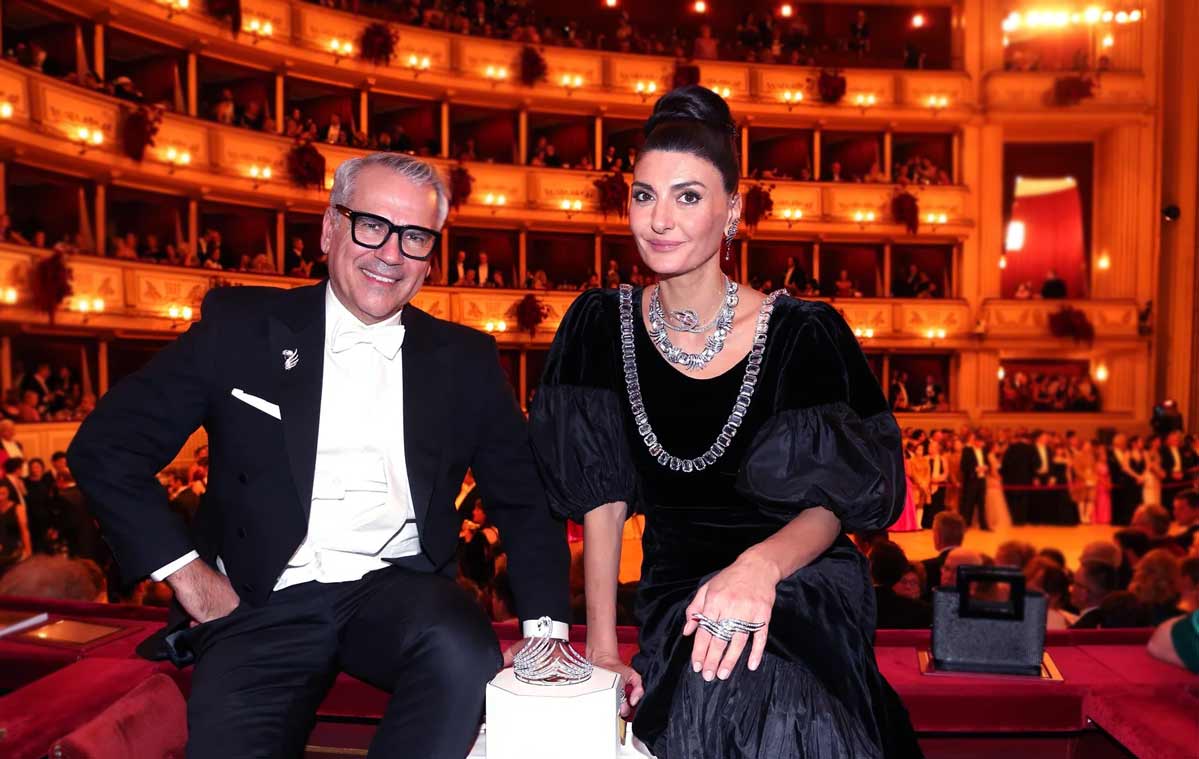
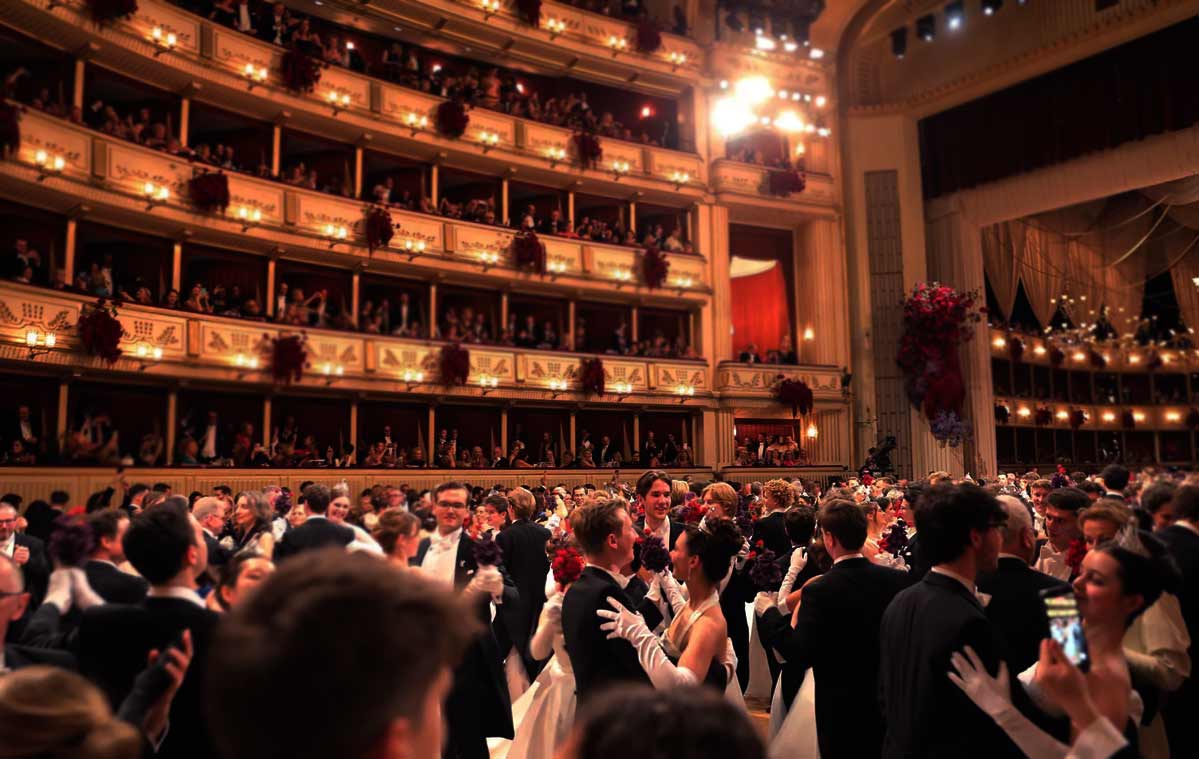
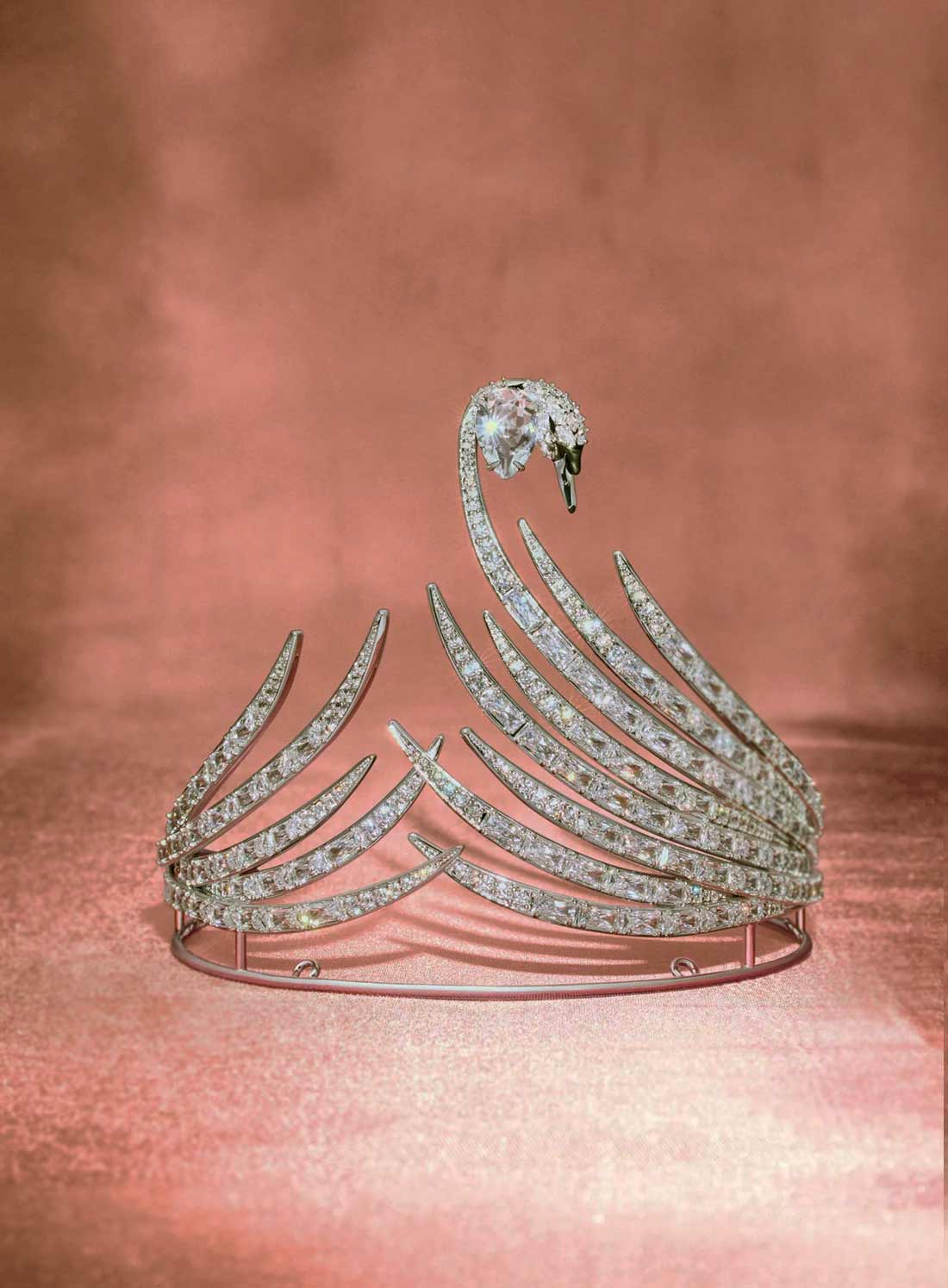
Swarovski’s presence at the Vienna Opera Ball says more than any campaign ever could. Beneath crystal chandeliers and velvet balconies, rows of debutantes in pristine white gowns moved in perfect rhythm, each crowned with a swan-shaped tiara designed by the brand. It was not just spectacle. It was positioning.
For decades, Swarovski has been tied to heritage and ceremony, but today it is actively rewriting its identity. Under CEO Alexis Nasard and creative director Giovanna Engelbert, the company is shifting toward a concept it calls “pop luxury.” The idea blends tradition with mass appeal, high fashion with accessibility, and cultural relevance with commercial scale.
This transformation did not happen in isolation. Engelbert introduced a more expressive, fashion-driven visual language that moved Swarovski closer to the center of contemporary culture. Nasard followed with a strategic overhaul, aiming to turn that cultural energy into measurable business growth. The goal is not simply to sell jewelry but to create a brand that feels present in everyday life while still delivering moments of glamour.
“Pop luxury” is not about price alone. It is about emotional value. Nasard frames it as a balance between joy, creativity, and accessibility, rather than the exclusivity that defines traditional luxury houses. In his view, customers are not just buying objects. They are buying a feeling, and that feeling must justify the cost at every level.
Execution, however, remains the real challenge. Swarovski operates across an unusually wide price spectrum. Entry-level pieces sit alongside high jewelry that reaches into six figures. Managing this range requires precision. The company has introduced a structured system that separates products by complexity and pricing, ensuring that each segment maintains its identity without diluting the overall brand.
Retail strategy reflects the same thinking. Earlier attempts to limit store presence in pursuit of exclusivity proved counterproductive. Swarovski thrives on visibility and impulse purchases, making accessibility essential. Physical stores still generate the majority of revenue, and their design now emphasizes color and styling rather than traditional product categories. The aim is to encourage exploration and layering, echoing the brand’s maximalist aesthetic.
Geography plays a crucial role as well. The United States remains the largest market, while Europe continues to provide stability. Japan shows strong growth, but China presents a more complex challenge. Despite its potential, the market has yet to fully align with Swarovski’s positioning. This gap highlights the difficulty of scaling a concept like pop luxury across diverse cultural landscapes.
Financially, the reset is beginning to show results. Growth has returned, supported by a combination of increased demand, strategic pricing, and customers trading up. Yet profitability remains a delicate balance. Investment decisions are made with strict criteria, focusing on cultural relevance, scale, and measurable return. Large-scale activations, such as the Vienna Opera Ball, are not just brand statements. They are calculated moves designed to reinforce both image and revenue.
At its core, Swarovski’s strategy is an attempt to occupy a unique space in the market. It does not seek to compete directly with traditional high jewelry houses, nor does it aim to blend into the crowded field of accessible luxury. Instead, it positions itself as something more fluid, a brand that can move between worlds while maintaining a distinct identity.
The real question is whether that balance can hold. Scaling a brand often risks diluting its essence, especially when accessibility becomes a priority. Swarovski’s answer lies in discipline. Every decision, from collaborations to store design, is measured against its ability to generate both cultural impact and economic return.
In an industry shaped by shifting consumer expectations and uneven economic conditions, this approach feels both ambitious and pragmatic. Swarovski is not chasing exclusivity for its own sake. It is building a model where visibility, emotion, and value coexist.
If it succeeds, “pop luxury” may prove to be more than a marketing concept. It could become a blueprint for how modern brands navigate the space between aspiration and accessibility, without losing the sense of magic that defines luxury in the first place.