
Love rarely follows a clear structure. It appears unexpectedly, often without logic, and finds its way into people’s lives on its own terms. Even more unusual is the moment when love grows alongside a shared creative vision. In the case of Lashao Gabunia and Teona Metreveli, the two are inseparable. Their relationship evolved in parallel with their work, forming a connection that feels both organic and deeply intentional.
Their story does not begin with a defined starting point. Instead, it unfolds as a gradual merging of attraction and collaboration. Early interest naturally shifted into creative partnership, and from there into something more profound. The development of their relationship mirrors the evolution of their brand, each step reinforcing the other.
Working together daily allowed them to understand each other beyond surface impressions. Teona describes Lashao as driven and focused, someone whose determination shapes everything he does. His ability to commit fully to his goals stands out as the quality she values most. Lashao, in turn, speaks about Teona with equal admiration. Her versatility, emotional depth, and reliability create a balance that complements his vision. This dynamic forms the backbone of both their personal and professional lives.
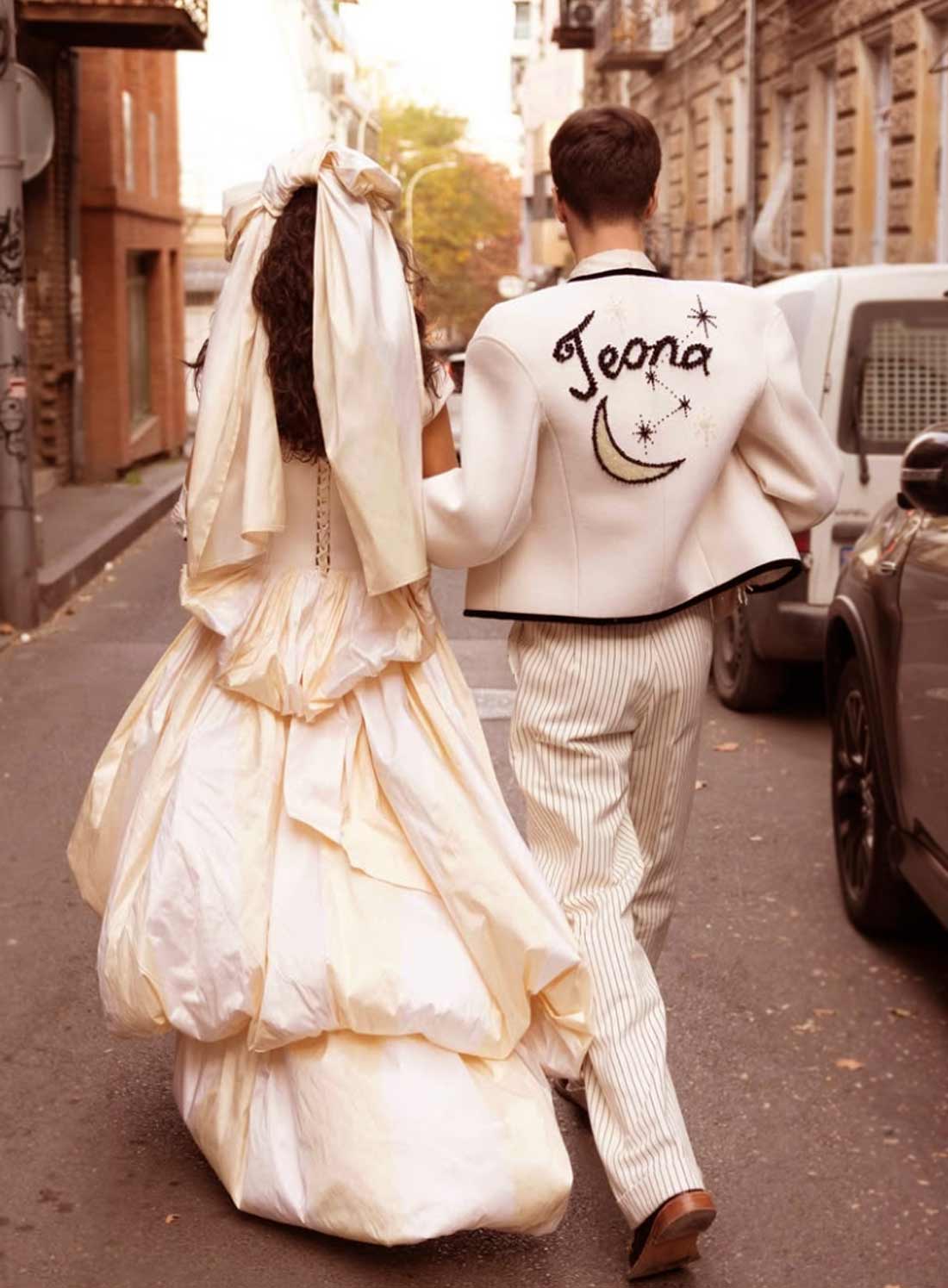
At the center of their partnership lies a shared value system. Family plays a defining role, acting as both foundation and direction. Their work does not exist separately from their personal life. Instead, both move toward the same purpose. Maintaining this balance requires constant adjustment, and compromise becomes essential. They approach decisions with mutual consideration, often choosing flexibility over rigidity in order to protect their connection.
This sense of unity extends directly into their brand, House of Jesus Star. The creative process is deeply collaborative, shaped by Lashao’s conceptual direction and Teona’s experience and perspective. Each collection begins with an emotional impulse. A feeling or question sets the tone, which then develops through research, visual references, and experimentation with form. As sketches turn into garments, the concept continues to evolve, often gaining depth during fittings and practical adjustments.
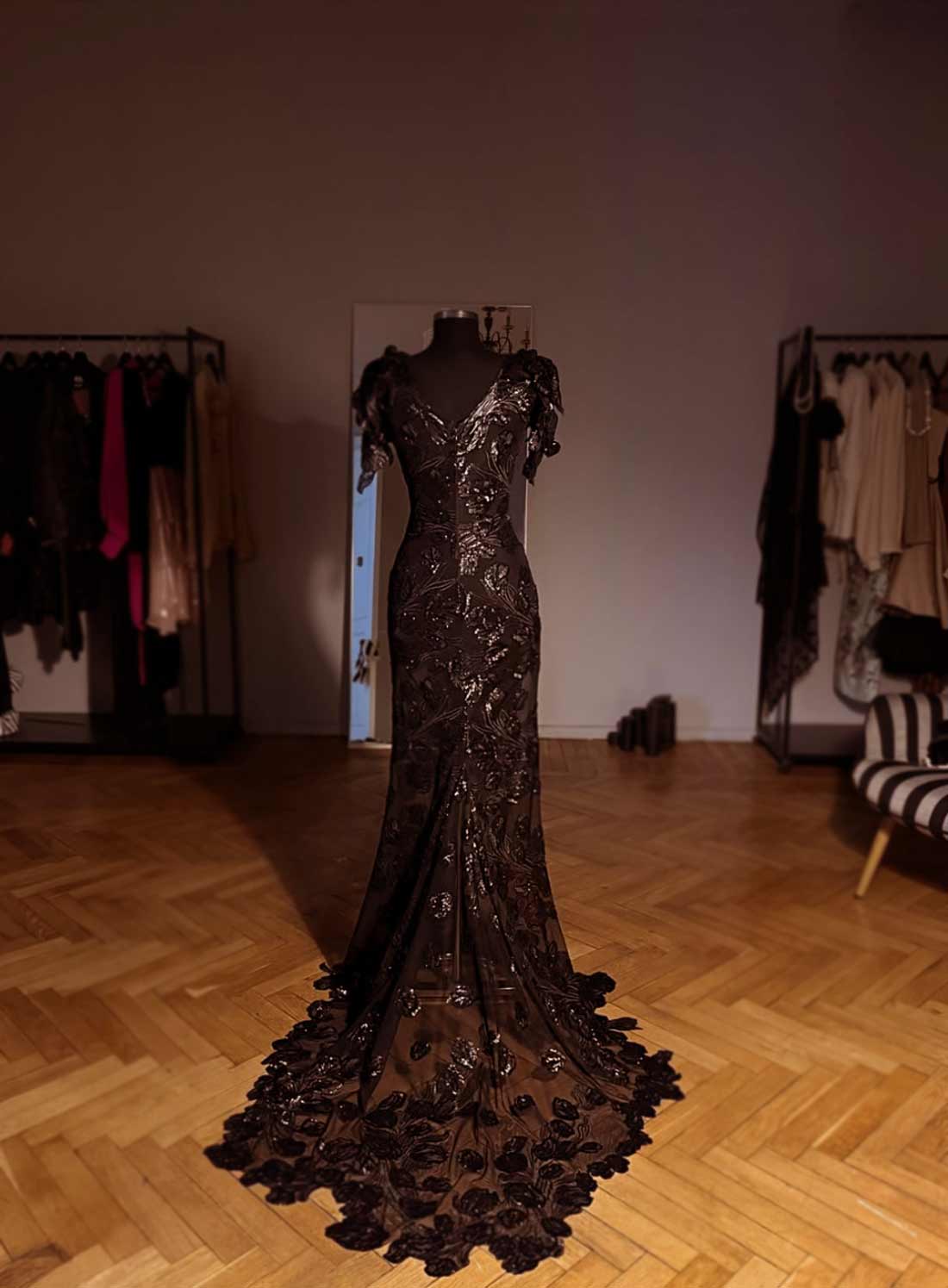
Teona plays a key role throughout this process. Her feedback influences decisions at every stage, offering both critical insight and creative support. While Lashao leads the artistic direction, the dialogue between them remains constant. The absence of rigid roles allows the process to stay fluid, guided more by intuition than hierarchy.
The identity of House of Jesus Star reflects this same fluidity. It is not positioned as a static brand but as an ongoing movement shaped by its environment. Tbilisi, with its distinct rhythm and energy, becomes an integral part of that identity. The city’s atmosphere feeds into the collections, while interactions with clients introduce new directions and ideas. This continuous exchange keeps the brand in motion, allowing it to grow organically.
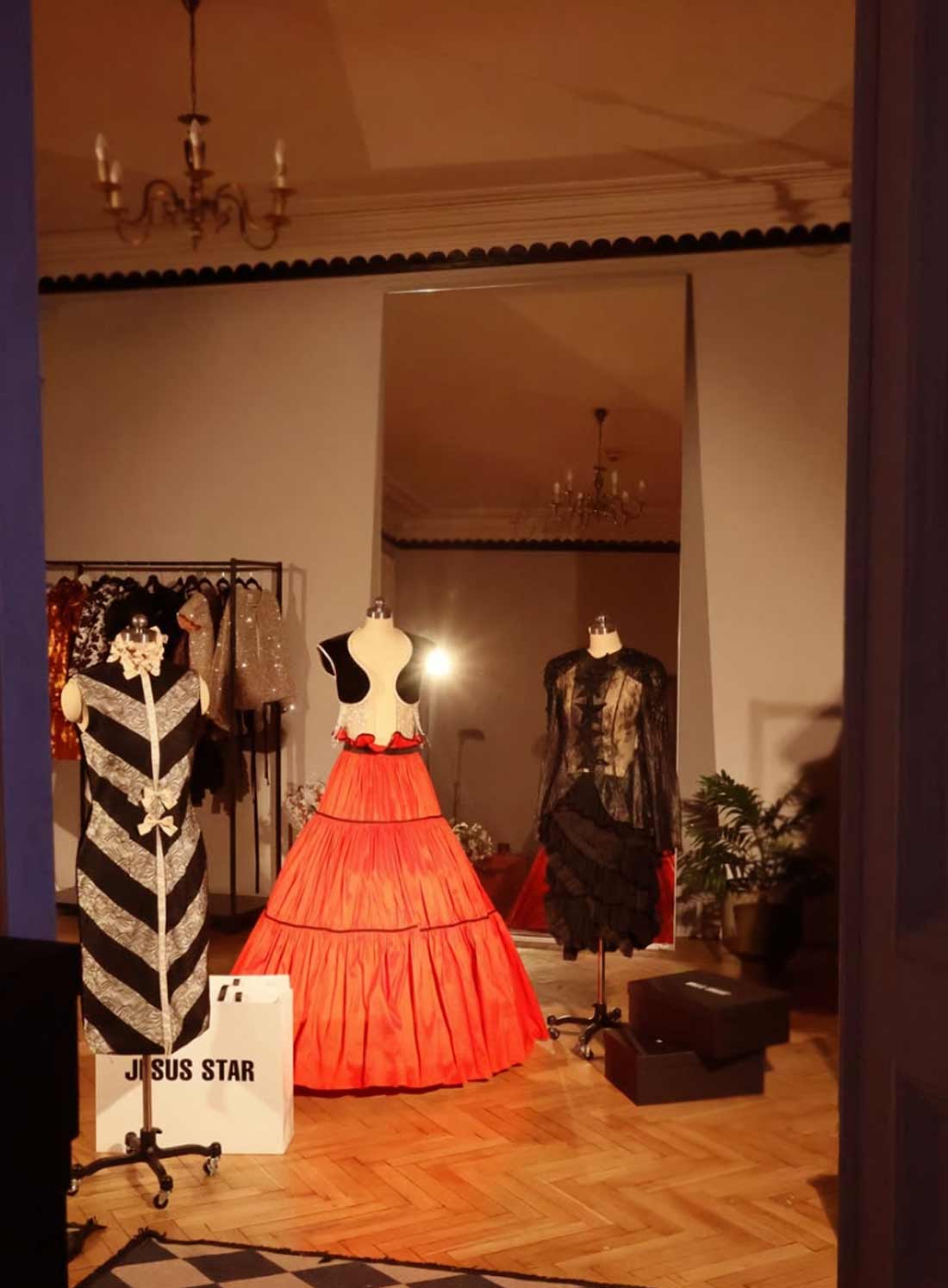
Within this process, Teona often takes on the role of a critical observer. Her perspective helps refine ideas, ensuring that each decision contributes to a stronger final result. At the same time, their relationship encourages personal growth. Both acknowledge how much they have changed since meeting, shaped by shared experiences and the choices they make together.
Despite their strong creative bond, individuality remains important. Each of them continues to develop personal ambitions, understanding that growth as individuals strengthens the relationship as a whole. Their shared mission is not limited to professional success. It centers on mutual support and the pursuit of happiness for one another.
In a world where creative partnerships can often feel calculated, their connection stands out for its sincerity. Love and work do not compete in their story. Instead, they reinforce each other, forming a structure that feels both stable and evolving.
House of Jesus Star becomes more than a fashion label within this context. It is a reflection of two perspectives coming together, shaped by emotion, experience, and a shared sense of purpose. Through this union, Lashao Gabunia and Teona Metreveli demonstrate how creativity can extend beyond design, becoming a language that defines both a relationship and a vision.