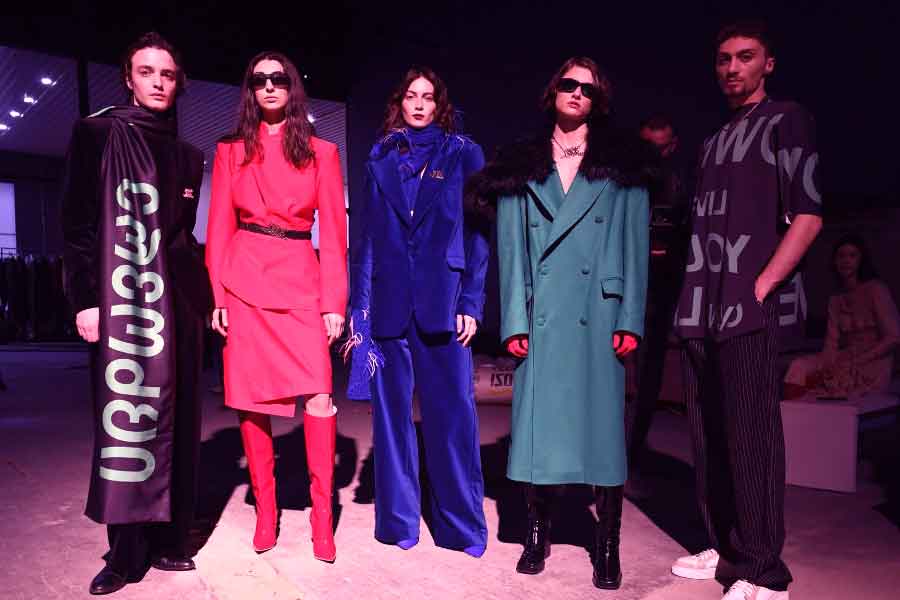
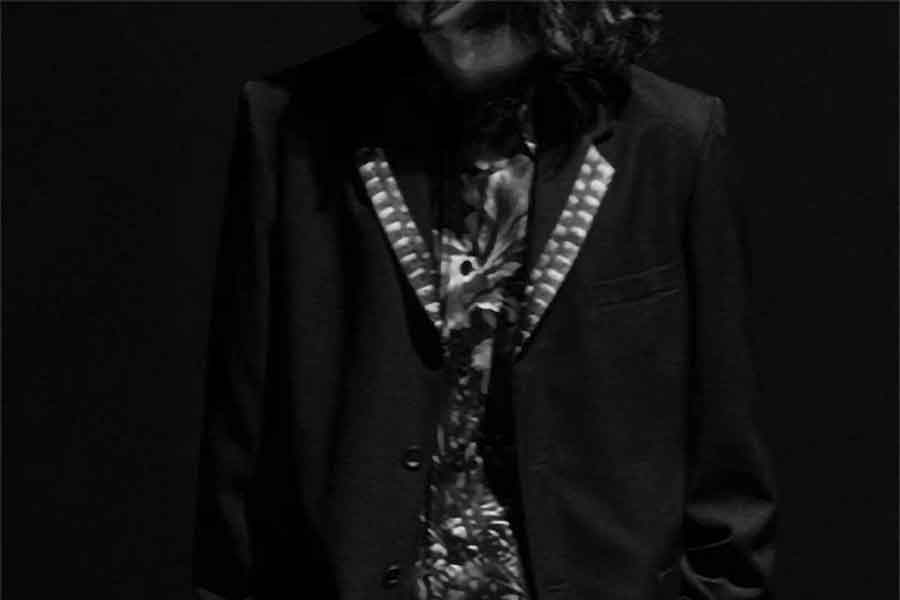
Paris – Georgian designer Irakli Kacharava made his Paris Fashion Week debut on Friday with a visually intense and politically layered runway presentation that blended performance, fashion, and social commentary.
The show incorporated spoken-word excerpts from recent public speeches addressing civil rights and migration, alongside cinematic fragments from internationally recognized films exploring identity and transformation.
Known for his work between Tbilisi and Berlin, Kacharava has been steadily gaining recognition in independent fashion circles for his hybrid approach to tailoring, streetwear, and conceptual storytelling. His Paris debut took place in a historic venue often used for cultural and artistic presentations, reinforcing the show’s dialogue between tradition and contemporary disruption.
For this collection, the designer presented an eclectic body of work that drew from multiple cultural references, including post-Soviet visual codes, Eastern European street culture, and sharply structured tailoring inspired by mid-century silhouettes. The result was a collection that moved between restraint and confrontation, blending formal construction with raw, expressive detailing.
The runway presentation was structured as a narrative experience rather than a conventional fashion show. Spoken excerpts addressing social inequality and freedom of expression were integrated into the soundtrack, creating a continuous tension between visual aesthetics and political messaging.
Archival video fragments and contemporary cultural references were also woven into the presentation, reinforcing the idea of fashion as a medium for cultural dialogue rather than purely commercial expression. The use of multimedia elements emphasized the designer’s intention to blur boundaries between disciplines.
At the core of the collection was a study of contrast. On one side, sharply tailored suits with structured shoulders and elongated proportions suggested authority and control. On the other, relaxed silhouettes, oversized shirts, and layered streetwear elements introduced a sense of fluidity and resistance.
Kacharava’s menswear looks featured wide trousers, heavy cotton shirts, and utilitarian jackets with exaggerated proportions. Accessories included bold belts, worn leather boots, and layered textile elements that referenced workwear and military uniforms without directly replicating them.
The womenswear segment continued the narrative through darker tonal palettes and sculptural silhouettes. Structured dresses, corset-inspired tops, and elongated skirts were presented in monochromatic compositions, emphasizing silhouette and movement over ornamentation.
A recurring visual theme throughout the collection was the tension between uniformity and individuality. While certain looks referenced collective identity through coordinated shapes and materials, others broke away into more expressive, deconstructed forms.
Streetwear elements played a significant role in balancing the collection’s conceptual weight. Bomber jackets, graphic layering, and relaxed tailoring introduced a contemporary rhythm, grounding the more theatrical pieces in everyday wearability.
In the final segment of the show, the tone shifted toward more casual and athletic references, with models wearing relaxed silhouettes, sports-inspired garments, and collaborative pieces developed with performancewear influences. This closing section introduced a sense of release after the intensity of the earlier looks.
Kacharava, who also works across creative direction roles within independent labels, is known for drawing inspiration from border cultures and transitional identities. His design language often reflects the complexity of navigating multiple cultural systems and aesthetic traditions.
Speaking after the show, the designer emphasized that the collection was not intended as a direct political statement, but rather as a reflection of lived experience and cultural tension. “Fashion is where contradictions become visible,” he noted, highlighting the role of clothing as both personal expression and social commentary.
The Paris debut positions Kacharava among a growing group of designers using runway presentation as a platform for broader cultural discussion. Rather than focusing solely on seasonal trends, the show framed fashion as an evolving language shaped by history, politics, and personal narrative.
With this presentation, the Georgian designer establishes a clear voice within the international fashion landscape – one defined by contrast, intensity, and a willingness to engage with uncomfortable themes through the language of clothing.