Georgian fashion doesn’t always announce itself loudly. Sometimes it just shows up, slightly shifted, and makes you question whether the change was there all along.
That’s exactly what happened when SITUATIONIST teamed up with the German heritage boot label Birkenstock-adjacent workwear cousin energy brands like Blundstone often represent in the fashion ecosystem – except here, the twist comes through a Georgian lens.
The base is familiar: a rugged Chelsea-style silhouette, built for durability, weather resistance, and everyday wear. It’s the kind of boot that doesn’t ask for attention because it already assumes it will survive anything you throw at it.
And SITUATIONIST didn’t really argue with that.
The structure remains intact – tough leather, elastic side panels, reinforced sole, pull tabs for function. Everything that makes the original boot what it is stays exactly where it should be.
So what changed?
At first glance: almost nothing. The boot still reads as industrial, grounded, and practical. The kind of footwear you’d expect to see in motion rather than on a pedestal.
But then you notice the details.
A slightly reworked upper finish. A tonal reinterpretation of the side paneling, shifting from purely functional design language into something more stylistic. A sole unit that feels marginally more sculpted, less purely utilitarian, more editorial.
It’s not a redesign. It’s a reframe.
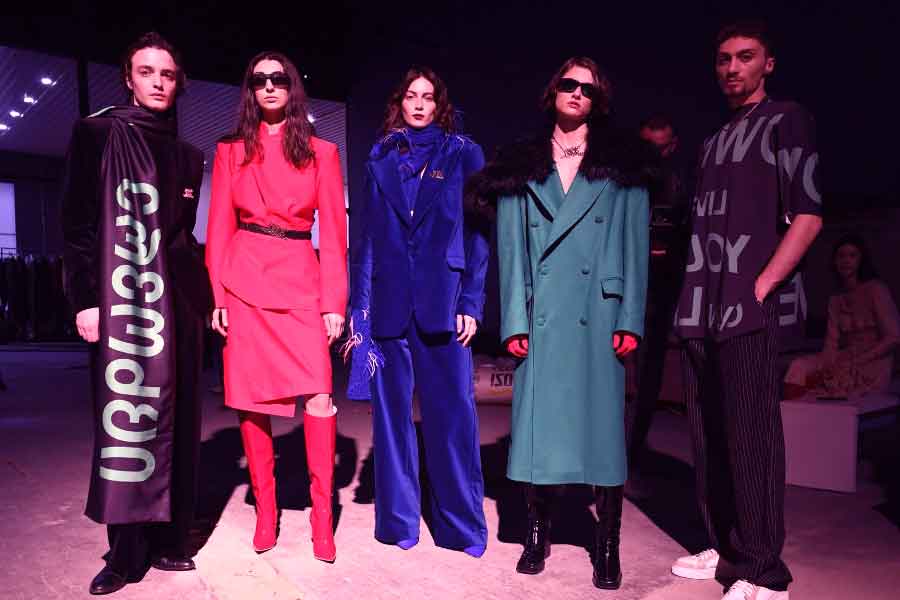
This is a pattern in Georgian fashion right now. MATERIEL does it with tailoring – keeping silhouettes familiar, but adjusting proportion and fabric until the mood changes completely. ANOUKI does it with femininity, refining rather than reinventing. Even George Keburia pushes accessories just far enough that they feel familiar and futuristic at the same time.
Nothing is fully rebuilt. Everything is slightly tilted.
The interesting part is that these Georgian labels don’t seem interested in breaking the original object. Instead, they treat design like editing – small interventions that change perception without changing structure.
That’s why the boot still works. It still feels like a Blundstone-style object at its core. But it also feels like something else now – something that has passed through a different cultural filter before returning to the same category.
And maybe that’s the point.
Not every collaboration needs to scream transformation. Sometimes the most interesting move is to leave everything intact and change just enough that people start looking twice.
In Georgia’s growing design scene, that “look twice” moment is becoming a signature.
And if you’re asking whether the boot is different?
It is. Just not in the way you expect.